

What if your most expensive piece of furniture was completely invisible? You might invest 50,000 AED in a bespoke velvet sofa, but if the air feels clashing or heavy, the visual luxury disappears. Many residents in Dubai discover that a fragrance which smells divine in a boutique feels entirely out of place in a minimalist penthouse. Master the art of scent and decor matching to complete your space. It's the difference between a room that looks beautiful and a space that feels truly intentional.
You understand that a home should be a sanctuary where every texture and tone works in harmony. Stop settling for fragrances that clash with your carefully curated mood. Discover how to pair artisanal fragrances with your design style to create a seamless sensory experience. This guide explores the relationship between fragrance notes and interior materials to help you curate a cohesive home environment and begin an unforgettable journey in home styling.
Key Takeaways
- Learn to treat fragrance as the final, invisible accessory that anchors your interior aesthetic and reinforces visual design cues.
- Master the art of scent and decor matching by pairing crisp, ozonic notes with minimalist lines or earthy accords with natural textures.
- Implement a strategic room-by-room scent-scape to transition seamlessly from social energy in the living area to restorative serenity in the bedroom.
- Discover the tactile relationship between materiality and aroma, ensuring your fragrance choices complement the wood, stone, and textiles in your home.
- Transition toward a curated, sustainable fragrance ecosystem that prioritizes artisanal quality for a clearer and more intentional atmosphere.
What is Scent and Decor Matching? The Invisible Layer of Design
Scent and decor matching is the sophisticated practice of aligning a room's visual aesthetic with its olfactory profile. It's the final, invisible layer of interior design. While a velvet sofa or a marble coffee table provides tactile luxury, the fragrance provides the emotional context. In the high-end residential markets of Dubai, where interior styling for a single villa can exceed 500,000 AED, neglecting the scent is a missed opportunity for total immersion. Fragrance isn't just a utility to mask odors; it's a sensory storytelling tool that completes the narrative of your home.
The biological foundation for this lies in the science of our sense of smell. Our olfactory bulb is directly connected to the brain's limbic system, which governs emotion and memory. This means scent bypasses logical processing to trigger immediate feelings. When you walk into a sun-drenched villa on Palm Jumeirah, a crisp citrus or light floral scent validates the visual brightness. Without this alignment, the experience feels unfinished.
The Concept of Olfactory Architecture
Scent defines the boundaries of a room without the need for physical walls. It acts as a transitional tool between different zones of the home. You might use a grounding, earthy scent in the foyer to welcome guests, then transition to a lighter, ozonic fragrance in the living area to enhance the perception of space and natural light. Research from the Sense of Smell Institute shows that people recall scents with 65% accuracy after a year, while visual recall drops to 50% after just four months. This makes scent the most enduring element of your home's identity. Explore the curated collection of fragrances to see how specific notes can define your space.
Why Visual Intent Needs Olfactory Support
The "mismatch effect" occurs when your nose and eyes receive conflicting information. A tropical, fruity scent in a dark, mahogany-lined library feels jarring. It creates a sensory disconnect that prevents the mind from fully settling into the atmosphere. Design is about intent. If a room is designed for deep focus or relaxation, the scent must anchor that mood. Using high-quality, artisanal ingredients is vital for maintaining design integrity. Synthetic, low-grade fragrances can cheapen the appearance of expensive furnishings, whereas complex, layered scents reinforce the prestige of the environment. Authentic scents like oud, sandalwood, or Mediterranean neroli provide a seamless bridge between your visual choices and the emotional payoff of the room.
Matching Scents to Popular Interior Design Styles
Visual design sets the stage, but fragrance completes the performance. Mastering scent and decor matching requires an understanding of how textures and colors translate into olfactory notes. The psychology of scent highlights how our brains link specific aromas to environmental comfort, making the right choice essential for a cohesive home. Whether your space features raw concrete or plush velvet, the scent should feel like a natural extension of the architecture.
Minimalist and Scandi Styles
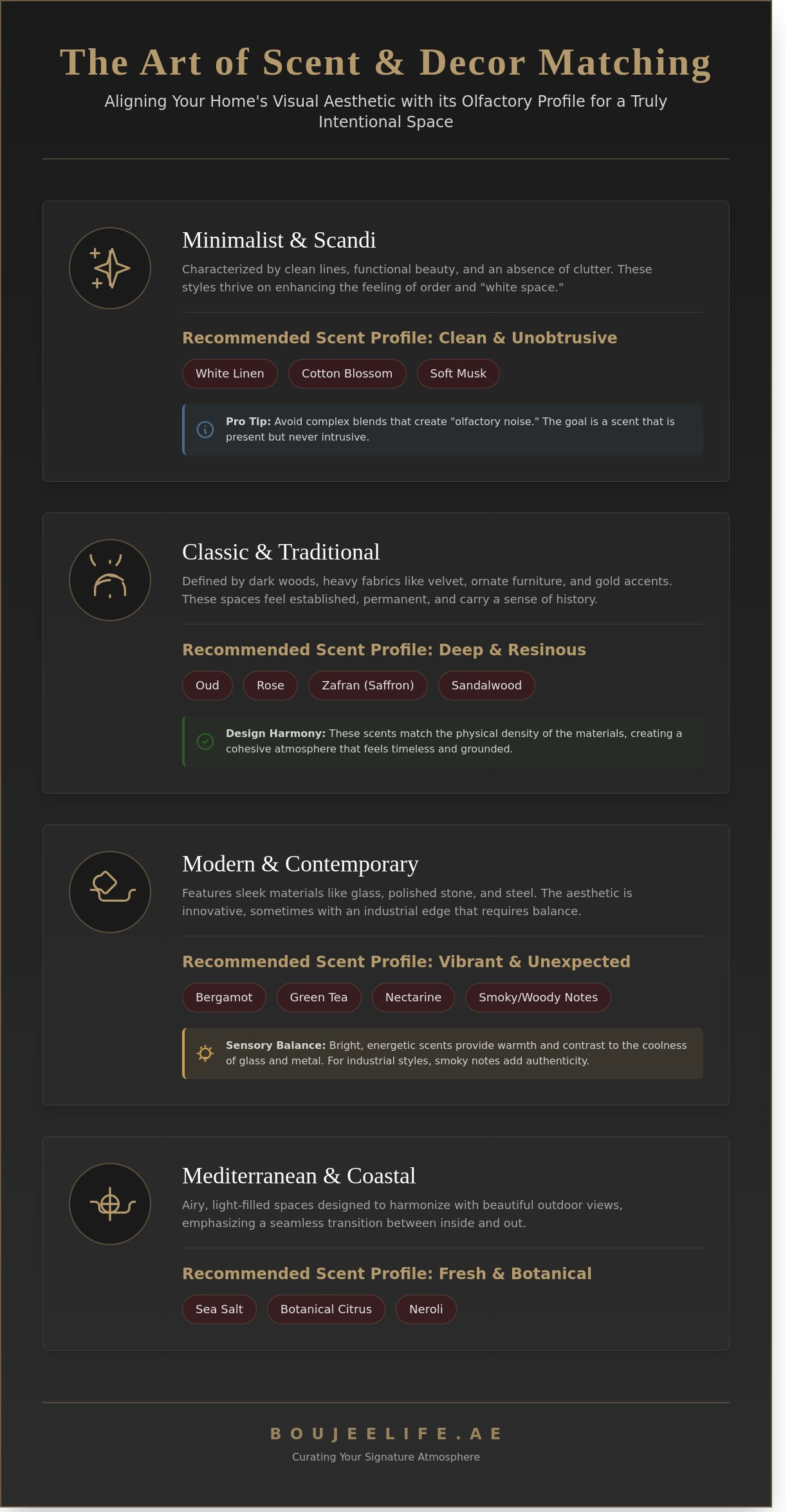
Minimalist interiors rely on "white space" and functional beauty. These environments thrive on clean scents that mirror the absence of clutter. Choose single-note profiles like white linen, cotton blossom, or soft musk. These fragrances enhance the feeling of cleanliness and order. It's best to avoid complex blends that might introduce olfactory noise into a quiet, curated room. A subtle scent supports the minimalist philosophy by remaining present but never intrusive.
Classic, Traditional, and Romanesque Aesthetics
Traditional spaces carry the weight of history through dark woods and heavy fabrics. To complement ornate furniture or gold accents common in UAE residences, look for deep, resinous notes. Rose and zafran offer a sophisticated nod to heritage, while oud provides a grounded, timeless base. These scents match the physical density of velvet and mahogany. They create an atmosphere that feels established and permanent rather than fleeting.
Modern and Contemporary Interiors
Sleek materials like glass, polished stone, and steel require vibrant, energetic scents to balance their inherent coolness. Sophisticated blends of nectarine, green tea, and bergamot provide a necessary brightness. These unexpected notes mirror modern design innovation. If your home features an industrial edge, consider balancing raw materials with smoky, woody, or even subtle metallic undertones for an authentic feel.
For those embracing the Mediterranean or coastal lifestyle, airy spaces pair beautifully with sea salt and botanical citrus notes. It's about finding the harmony between the view outside and the air inside. You can explore a range of curated home fragrances to find the perfect match for your specific interior style.
Materiality and Fragrance: Scenting Based on Textures
Design is a tactile conversation between the surfaces we touch and the air we breathe. Successful scent and decor matching relies on the psychological link between physical texture and fragrance. When you walk across a cool marble floor or run your hand over a raw oak table, your brain expects a specific olfactory response. Research published in 2020 indicates that the olfactory atmosphere in the built environment has a profound influence over our mood and well-being, often acting as the invisible thread that ties a room together. By aligning scents with materials, you create a cohesive sensory narrative that feels both intentional and sophisticated.
The Scent of Natural Materials
Natural foundations like timber and stone demand grounding aromas. If your living space features heavy wood accents, scents like Sahara or sandalwood reinforce that organic presence. These notes mimic the density of the grain, providing a sense of permanence. For the sleek, cool surfaces of Calacatta marble or granite common in Dubai villas, consider 'cold' spices or mineral-heavy fragrances. These pairings highlight the stone's crispness. Adding botanical scents to areas with indoor palms or vertical gardens further enhances the biophilic connection, making the greenery feel more vibrant and authentic.
Textiles and Olfactory Softness
Fabrics dictate the emotional temperature of a room. Heavy velvets and silks benefit from opulent, powdery, or spicy fragrances that match their physical weight. If you have thick, floor-to-ceiling drapery, a floral note like Zahra can lift the visual heaviness. This makes the space feel airy yet refined. To soften a room with minimalist lines or metallic finishes, introduce warm vanilla or amber. These notes create a 'cocoon' effect, adding a layer of comfort to visually stark environments. Explore the full range of curated fragrances at Boujee Life to find your perfect textural match. Mastering scent and decor matching ensures every element of your home, from the glass coffee table to the linen sofa, feels harmonized.
Glass and metal surfaces present a different challenge. These materials are sharp, reflective, and modern. They pair best with bright, citrusy, or sharp floral notes that mirror their clarity. A room filled with chrome and glass feels energized when infused with bergamot or crisp white tea. This alignment sharpens the aesthetic, ensuring the atmosphere remains as polished as the decor itself.
Room-by-Room Scent-Scaping Strategy
Your home is a sequence of experiences. Each room serves a distinct purpose, and the fragrance should reflect that function while mirroring your aesthetic choices. The entrance hall serves as the first chapter. It creates the initial impression for guests and signals a return to comfort for residents. A crisp, welcoming scent in the foyer bridges the gap between the bustling Dubai streets and your private sanctuary. Opt for airy, botanical notes that feel expansive and clean.
Designing the Social Heart of the Home
The living room is a multi-layered space where scent and decor matching must be handled with precision. It's a social hub that requires a balanced profile. You don't want a fragrance that competes with the aroma of coffee or evening appetizers. During the day, light and citrus-heavy notes complement sun-drenched interiors and open-plan layouts. As the sun sets, transition to richer, more resinous notes like amber or sandalwood to suit an evening of hosting. Explore our signature collections for living room inspiration that pairs with high-end furnishings.
Private Sanctuaries and Restorative Spaces
Bedrooms function best as low-scent zones. The goal here is restoration rather than stimulation. Overloading a sleeping area with heavy perfume can lead to olfactory fatigue. This is a state where your brain ignores the scent entirely because it's too consistent and intense. Instead, use subtle lavender or soft rose to bridge the gap between silk linens and deep relaxation. These notes are grounded in botanical science; lavender is frequently cited in clinical studies for its ability to improve sleep quality by increasing the percentage of deep, slow-wave sleep.
Focus and Productivity in the Workspace
The home office requires a sharp, invigorating atmosphere to foster cognitive performance. Minimalist desk setups pair perfectly with singular, focused fragrance notes. Research from the Takasago Corporation in Japan found that workers made 54 percent fewer typing errors when the environment was scented with lemon. Peppermint and eucalyptus also provide the mental clarity needed for long hours of deep work. Avoid heavy, musky scents in small or enclosed offices. They often feel suffocating and can lead to a sense of lethargy rather than focus.
Curating a Sustainable Signature Atmosphere
Think of your home fragrance as a living ecosystem rather than a simple retail transaction. True scent and decor matching moves beyond the occasional candle purchase; it's about maintaining a sensory narrative that complements your architecture and lifestyle year-round. Artisanal quality is the foundation of this approach. Mass-produced alternatives frequently use paraffin wax which can release soot. This eventually coats your silk wallpapers or marble surfaces in a fine residue that dulls their natural luster. High-grade natural waxes provide the scent clarity needed to define a space without compromising the health of your environment or the integrity of your interior finishes.
The Longevity of Luxury Fragrance
Investing in luxury candles means you're acquiring permanent decor pieces. A heavy, hand-blown glass vessel or a hand-carved stone jar remains a design staple long after the last flicker. In the UAE market, where bespoke interiors often require significant investment, every accessory must earn its place. Professional refill services allow you to preserve these beautiful objects while reducing environmental impact. Once the wax is gone, you can easily repurpose your jars. Clean them with warm water to create sophisticated organizers for your vanity or desk. This maintains visual continuity while allowing your fragrance profile to evolve with your mood.
Creating Your Bespoke Home Identity
Your signature house smell should feel like a custom-tailored experience. It's unique, intentional, and layered. Achieving this requires scent consistency across different zones to ensure a seamless transition for anyone walking through your doors. You don't need to change your furniture to reflect a new season; you simply shift the olfactory layers. Use lighter, ozonic notes in the morning to brighten your space, then introduce deeper ambers or oud as the sun sets over the skyline. This creates an immersive atmosphere that feels curated rather than cluttered. To start designing your own sensory landscape, browse our full range of artisanal candles to find your match.
Sustainability in home styling isn't just about the materials; it's about the endurance of the aesthetic. When you choose scent profiles that mirror your decor's textures, you create a timeless environment. A velvet sofa paired with a rich sandalwood note feels more intentional than a random floral scent. By focusing on quality refills and layered fragrance profiles, you ensure your home remains a sanctuary of sophisticated comfort that stands the test of time.
Elevate Your Space with Sensory Design
Your home is a curated collection of textures and tones. It's where soft linens meet polished stone and natural light plays against carefully chosen shadows. Mastering the art of scent and decor matching transforms these physical elements into a complete multisensory experience. By aligning artisanal fragrances with your specific interior style, you create a narrative that lingers long after guests leave. Whether you layer the deep, resinous notes of Noctis in a leather-clad study or introduce the floral elegance of Sultana to a bright lounge, the right aroma grounds your design.
Professional scent-scaping isn't just about the initial impression. It's a commitment to a sustainable and sophisticated environment. Utilizing a professional refill service ensures your signature atmosphere remains consistent while respecting the planet. These subtle, intentional adjustments turn a beautiful house into a deeply personal sanctuary. You've already mastered the visual landscape of your home; now it's time to perfect the invisible layer that defines it. Explore the Boujee Life Collection and find your perfect decor match to begin your transformation. Your journey toward a more harmonious and fragrant home starts with a single, inspired choice.
Frequently Asked Questions
Can I use different scents in every room without them clashing?
You can certainly use different fragrances in every room if you maintain a consistent base note like sandalwood or amber throughout the house. This creates a cohesive transition as you move between spaces. In large Dubai villas, hallways act as natural buffers. Choose scents that share a similar intensity to ensure your scent and decor matching feels curated rather than chaotic.
How do I choose a candle that matches a minimalist decor style?
Select a candle with a monochromatic, matte, or transparent vessel to complement a minimalist aesthetic. Fragrances like white tea, cotton, or light citrus mirror the clean lines and airy feel of a clutter-free room. Avoid ornate labels or bright colors. A simple ceramic jar in a neutral tone provides a sensory experience that doesn't disrupt your home's visual "less is more" philosophy.
What are the best scents to pair with dark wood and leather furniture?
Rich materials like dark oak and leather demand deep, resinous scents such as oud, tobacco, or spiced saffron. These heavy notes ground the visual weight of the furniture. In a sophisticated study or library, these fragrances enhance the sense of warmth and permanence. A premium oud candle, typically priced around 400 AED in luxury UAE boutiques, perfectly echoes the texture of high-end upholstery.
Does the color of the candle vessel need to match my room's color palette?
Your candle vessel should function as a deliberate accent piece within your existing color scheme. It doesn't need to be an exact match, but it should be harmonious. Gold or bronze vessels add warmth to rooms with earthy tones, while black or marble containers suit modern, monochromatic spaces. Treat the vessel as a small sculpture that bridges the gap between your olfactory and visual decor.
How often should I change my home's scent to match seasonal decor updates?
Update your home's fragrance profile four times a year to reflect the changing light and mood of each season. Even in the UAE's consistent climate, your interior habits shift. Transition from crisp, aquatic notes during the bright summer months to warmer, resinous scents during the cooler December evenings. This quarterly refresh ensures your scent and decor matching strategy remains evocative and relevant to your lifestyle.
Is it better to use one strong candle or several smaller ones for scent-scaping?
Use several smaller candles placed at different heights to create a layered and balanced fragrance experience. A single large candle often creates an overwhelming concentration of scent in one corner. By distributing smaller vessels, you allow the fragrance to move naturally with the room's airflow. This technique provides a more subtle, immersive atmosphere that feels integrated into the space rather than forced.
How do I ensure my candle scent doesn't overpower small spaces?
Choose smaller 190g candles or reed diffusers for compact areas like powder rooms or entryways. Small spaces trap fragrance quickly, so delicate notes like lily of the valley or sea salt work best. If you're using a candle, burn it for shorter increments of 30 minutes. This provides enough scent to transform the room without the fragrance becoming cloying or intrusive.
What is the most versatile scent family for a modern home?
The woody scent family is the most versatile choice for contemporary interiors. Notes of cedarwood, sandalwood, and vetiver offer a sophisticated, gender-neutral foundation that complements almost any design style. These scents provide an organic warmth that balances the glass and steel often found in modern Dubai penthouses. They're timeless, refined, and rarely clash with other decorative elements in your home.

