

The first lighting of a luxury candle is the most critical moment of its existence, yet it's where most collectors unknowingly fail. You've likely felt the frustration of watching a 450 AED artisanal piece develop a deep wax tunnel or seeing a pristine glass vessel stained by unsightly black soot. It's a common disappointment that shouldn't happen when you've invested in world-class craftsmanship for your living space. We agree that a premium fragrance should be a seamless, immersive experience, not a source of maintenance stress. Mastering the specific rituals of how to burn a candle transforms a simple act into a sophisticated practice that preserves the fragrance integrity and extends the longevity of your wax. This masterclass reveals the essential science of the four hour memory burn, the precision of trimming wicks to exactly six millimeters, and the secrets to achieving an unmatched scent throw that fills your Dubai home perfectly. You'll discover how to treat every vessel with the respect it deserves while ensuring a clean, even burn every single time.
Key Takeaways
- Master the essential first burn to establish wax memory, ensuring your artisanal vessel maintains a flawless surface throughout its lifespan.
- Learn the precise technique of trimming wicks to 5mm before every lighting to prevent soot and regulate flame intensity for a cleaner experience.
- Discover how to burn a candle effectively in modern UAE interiors by shielding the flame from the disruptive airflow of air conditioning.
- Identify the sensory cues of common burn issues and master the foil method to restore a tunneled candle to its original, level state.
- Transition your finished vessel into a repurposed decorative object by safely removing residual wax to extend the life of the artisanal piece.
The Ritual of the First Burn: Setting the Memory of the Wax
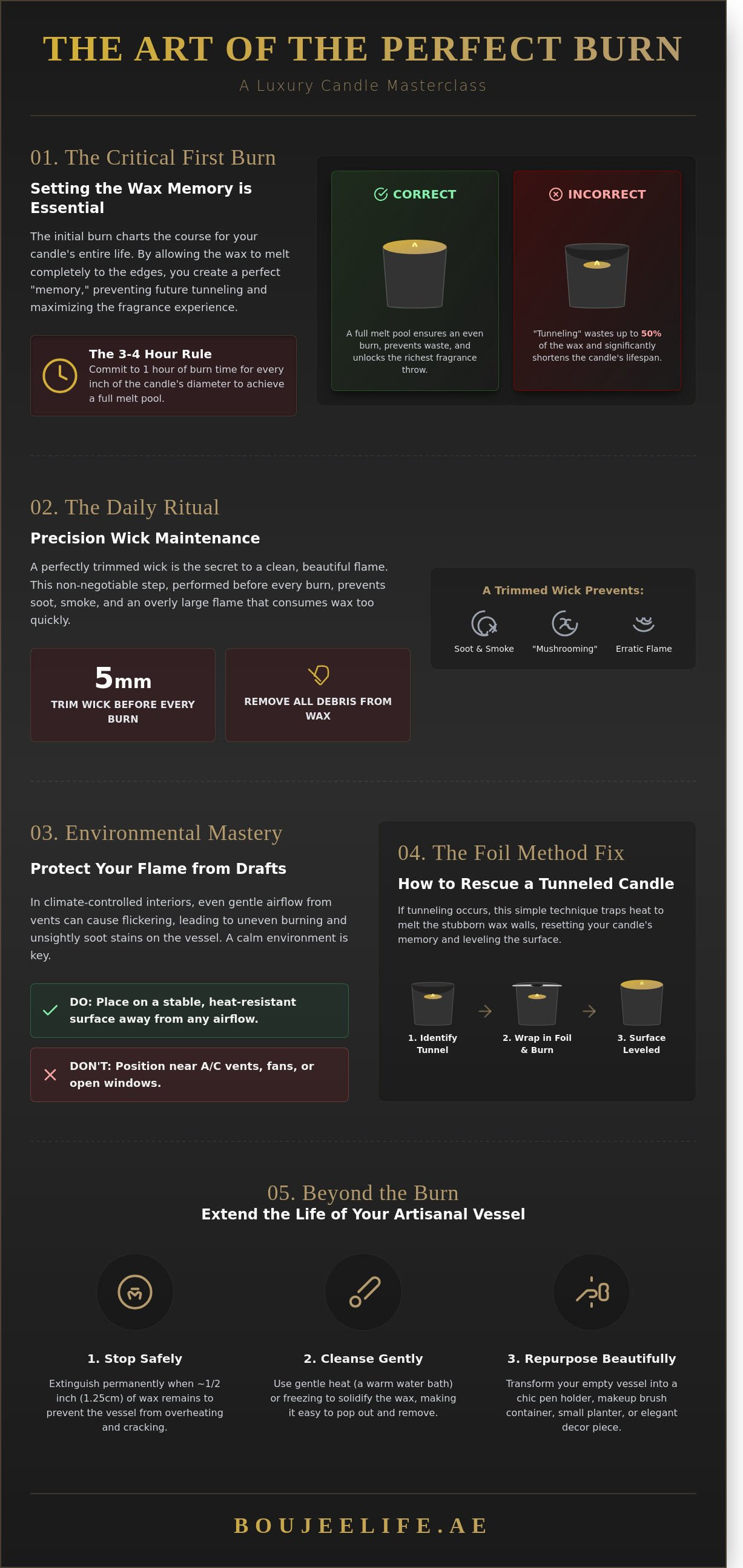
The first time you light a wick, you aren't just illuminating a room; you're teaching the wax how to behave. This initial session is the most critical moment in the life of your luxury purchase. Understanding how to burn a candle begins with the scientific concept of wax memory. Wax is a complex medium that retains the physical history of its previous burns. If you extinguish the flame before the wax liquefies completely across the surface, you create a permanent "memory ring." This ring dictates that every subsequent burn will only melt to that same diameter, leaving a hard wall of wasted wax around the edges. It's a structural flaw that can't be easily undone.
To achieve a perfect burn, you must observe the visual cues of the melt pool. You're looking for a shimmering, level lake of liquid gold that reaches every side of the vessel. This process requires significant patience. The standard rule for high-quality wax is one hour of burn time for every inch of the vessel's diameter. For a standard luxury candle, this often means a commitment of three to four hours for that first lighting. During this time, you'll witness the olfactory transition from cold throw to hot throw. The scent profile evolves as the heat releases deeper, more complex notes that remain dormant at room temperature.
Why Wax Memory Matters
Precision is everything when dealing with the sophisticated formulations found in the all collections. These artisanal wax blends are designed for a clean, even melt, but they're sensitive to early termination. When you rush the first burn, you effectively tunnel the candle. This tunneling can reduce the total lifespan of your candle by as much as 50 percent. It's a significant loss of both fragrance and value. By allowing the wax to reach the edge, you ensure that every gram of scented wax is eventually utilized, maximizing the return on your investment.
Preparing Your Sensory Space
The environment where you light your candle is just as important as the wax itself. Choose a stable, heat-resistant surface that sits away from drafts or air conditioning vents. In Dubai's climate-controlled interiors, even a slight breeze can cause the flame to flicker, leading to uneven heat distribution and soot buildup. A calm space allows the fragrance notes to develop fully without being diluted or dispersed too quickly. Safety is paramount, so ensure the vessel is clear of flammable materials while maintaining the aesthetic integrity of your decor. This preparation ensures the experience is as seamless as it is fragrant. Mastery of how to burn a candle starts with this disciplined, sensory approach.
The Craft of Wick Maintenance: Precision for a Pure Flame
Mastering the technicalities of a luxury candle requires more than just a match. It demands a ritual of precision. Before every lighting, trimming the wick to exactly 5mm is essential. This small adjustment dictates the entire lifecycle of the piece. A long wick acts as an oversized straw. It draws up more liquid wax than the flame can efficiently process. This imbalance leads to a dancing flame. The erratic movement generates excess heat and consumes your investment too quickly. By keeping the wick short, you regulate the fuel flow and ensure a steady, calm glow that lasts for the intended duration.
When you understand how to burn a candle correctly, you avoid the chemical phenomenon known as mushrooming. This occurs when carbon buildup accumulates at the tip of the wick. The carbon cap interferes with the combustion process, resulting in a dim, sputtering light and heavy smoke. Removing this buildup ensures the flame remains steady and the wax pool stays pristine. If the wick drifts during a long burn, gently nudge it back to the center while the wax is still fluid. This prevents uneven melting and protects the glass from overheating. Precision here preserves the integrity of the vessel.
The Ideal Trim: A Step-by-Step Guide
Invest in a professional wick trimmer. Unlike standard scissors, these tools feature a built-in tray to catch debris. Never leave trimmings or charred fragments inside the wax pool. These remnants act as secondary wicks, creating multiple heat points that can crack the vessel. Maintaining a 5mm length is vital for complex fragrances like Oud or Rose. Excess heat from a long wick can scorch these delicate olfactory notes. For those curating a sensory atmosphere, exploring the full collection of artisanal scents provides the perfect canvas for these techniques.
Preventing the Smoke Signal
Black soot on the interior of a glass or ceramic vessel is a sign of incomplete combustion. This happens when the flame is starved of oxygen or overwhelmed by a long wick. Learning how to burn a candle with this level of detail ensures your space remains soot-free. If residue occurs, wait for the wax to cool completely. Wipe the interior with a soft, damp cloth or a touch of isopropyl alcohol. This removes the residue without damaging the finish. A clean vessel reflects the light better, enhancing the visual experience of the glow.
Environmental Mastery: Protecting Fragrance in Modern Interiors
In the luxury homes of the UAE, the interior climate is a carefully curated experience. However, the same air conditioning systems that provide comfort often disrupt the delicate physics of a scent. Understanding how to burn a candle effectively requires a keen eye for your surroundings. Air conditioning vents create invisible currents. These drafts pull the flame to one side, leading to an uneven melt pool and unsightly black soot on the glass. When the flame is forced to dance aggressively, it loses the steady heat required to liquefy the wax to the edges of the vessel.
Managing Drafts and Airflow
When a flame flickers excessively, it consumes wax at an inconsistent rate. This instability often triggers the tunneling phenomenon in humid climates, where the center sinks while the edges remain hard. To maintain a steady, upright flame, consider the placement of architectural shields. A heavy hurricane glass or a minimalist cloche provides a sanctuary for the wick. These tools don't just add a layer of design; they stabilize the thermal environment. This ensures the heat radiates evenly across the entire surface of the wax, preventing the waste of premium materials.
Ambient temperature also dictates the "throw," or the distance the fragrance travels. In rooms kept below 20 degrees Celsius, the wax may struggle to reach the edges, trapping the scent within the jar. Conversely, direct sunlight is a silent predator for premium collections. UV exposure can cause high-quality vegetable waxes to yellow within days. More importantly, heat from a window can cause the volatile essential oils to evaporate; this leaves you with a scentless vessel before you've even struck a match.
Storage Ethics for Scent Longevity
Your ritual shouldn't end when the flame is extinguished. Storage is a critical component of how to burn a candle for maximum longevity. Always replace the lid once the wax has completely cooled. This simple act preserves the delicate top notes of the perfume, preventing the citrus and floral layers from dissipating into the room. A lid also serves as a barrier against the environment, ensuring the olfactory profile remains true to the master perfumer's original intent.
Dust is another often overlooked factor in scent degradation. Fine particles that settle on the surface act as secondary wicks when lit. These tiny contaminants create "micro-flames" that produce smoke and taint the purity of the fragrance. Store your collection in a cool, dry space, ideally between 18 and 25 degrees Celsius. This temperature range maintains the structural integrity of the wax and ensures the scent remains as potent as the day it was poured. By treating the storage of your candles with the same respect as a fine fragrance, you extend the life of every gram of wax.
Recognising the Signs: Troubleshooting Common Burn Issues
Mastering the technical side of how to burn a candle ensures your investment remains a centerpiece rather than a frustration. Even the most prestigious hand-poured waxes can behave unpredictably if the environment isn't perfect. Identifying a fault early allows you to intervene before the vessel is compromised. In Dubai, where indoor climate control is constant, managing the interaction between cold air currents and hot wax is essential for a flawless aesthetic.
The Foil Method and Wax Levelling
Tunneling occurs when the wax only melts in the center, leaving a stubborn ring of solid wax around the edges. This usually happens if the first burn was too short. You can rescue the piece using a simple heat-trapping technique. Wrap a layer of aluminum foil around the top of the jar, folding it over the edges while leaving a 3cm opening in the middle. This reflects heat back toward the cold wax. Monitor this closely for 30 minutes; the outer ring should liquefy and level out. If the tunnel is deeper than 1cm, the wick may drown before the edges melt. Never pour liquid wax down the sink. Wax begins to solidify at approximately 50 degrees Celsius, which can cause immediate and expensive plumbing blockages in residential towers.
When the Flame Fails
A "drowning" wick is often the result of trimming too aggressively. If your wick is shorter than 5mm, the melt pool will quickly submerge the flame. To fix this, extinguish the candle and use a paper towel to soak up a small amount of liquid wax, exposing more of the wick. Relight it once you've cleared the path. If the flame remains weak, check for drafts. Air movement exceeding 2 meters per second can cause a flame to flicker or lean, preventing it from generating the heat necessary to sustain a healthy melt pool. Ensure your candle sits on a level surface away from AC vents to maintain a steady, vertical burn.
The "Half-Inch Rule" is a non-negotiable safety standard for luxury glassware. Stop burning your candle when 1.25cm of solid wax remains at the bottom. While it's tempting to finish the jar, the lack of wax allows the glass base to reach temperatures exceeding 100 degrees Celsius. This creates a risk of the jar cracking or damaging the surface beneath it. Differentiate between a fault and a natural artisanal characteristic; soy and beeswax blends often develop a slightly textured, "cauliflower" surface after cooling. This is a sign of high-quality, natural materials rather than a technical defect.
Protect your home and elevate your atmosphere by choosing scents designed for longevity. Explore our curated collection of luxury fragrances and experience a superior burn today.
Extending the Sensory Experience: Longevity and Sustainability
The lifecycle of a luxury candle doesn't end when the wick reaches its limit. Mastering how to burn a candle properly ensures you get the most out of the initial wax, but the true art lies in what happens next. A high-quality vessel is an artisanal piece designed for a second life. Embracing a circular fragrance economy reduces waste while maintaining the aesthetic harmony of your home. This transition from a functional object to a repurposed decorative piece reflects a commitment to sustainable luxury that resonates with the UAE Circular Economy Policy 2021-2031.
Cleaning the Artisanal Vessel
Removing residual wax requires patience to protect the vessel's finish. The freezer method is often the most effective for delicate containers. Place the cooled vessel in the freezer for approximately two hours. This causes the wax to contract; it should pop out in one solid piece with a gentle nudge from a wooden spoon. Avoid using metal knives as they can scratch the interior coating or glass.
The warm water method is a reliable alternative for stubborn residue. Fill the vessel with water heated to roughly 60 degrees Celsius. Don't use boiling water because the thermal shock can crack high-end glass. Let it sit until the wax floats to the surface. Once the water cools, lift the wax disc away. To preserve the integrity of the branding and exterior finish, wash the vessel by hand with a soft cloth and mild detergent. These cleaned containers become perfect vessels for housing succulents, organizing vanity essentials, or serving as sophisticated desk accessories.
The Professional Refill Journey
Sustainability meets sophistication through professional replenishment. Many collectors in Dubai choose to keep their signature vessels indefinitely by opting for refill services. This approach is highly cost-effective within the local market. For instance, refilling a signature scent like Sultana or Noctis often costs significantly less than purchasing a new weighted vessel. You can achieve savings of up to 30 percent compared to buying a completely new unit.
Refilling allows you to maintain the olfactory atmosphere you’ve curated without accumulating unnecessary glass. It's a seamless way to transition between seasons. You might choose the deep, oud-heavy notes of Noctis for the winter months and move toward lighter profiles as the temperature rises. You can explore the full range of scents and vessel options available for your collection at https://boujeelife.ae/collections/all. This commitment to longevity ensures that your sensory journey remains uninterrupted. Understanding how to burn a candle is only the beginning of a long-term relationship with your favorite fragrances.
Elevate Your Sensory Narrative
Transforming your living space into a sanctuary of refined scent is a deliberate craft. Mastering how to burn a candle ensures that every artisanal fragrance note performs with absolute clarity. By prioritizing the initial wax memory and maintaining a precise wick, you extend the life of your investment and preserve the purity of the flame. Our commitment to sustainable luxury means your experience doesn't end when the wax runs low. We offer a professional candle refill service across the UAE, allowing your favorite vessels to remain a permanent fixture in your home. Each of our scents is meticulously crafted for sophisticated interiors, balancing depth with environmental consciousness. It's about more than just light; it's about the atmosphere you curate for yourself and your guests. You deserve a home that reflects your appreciation for the finer details. Explore the full Boujee Life collection and find your next signature scent. Your journey into a world of exquisite fragrance is just beginning.
Frequently Asked Questions
Why is my candle tunneling and how can I stop it?
Candle tunneling occurs because the wax didn't melt across the entire surface during previous sessions, creating a dry outer ring. You can fix this by wrapping the top of the jar in aluminum foil with a small hole in the center to trap heat. This technique melts the stubborn outer wax and levels the surface within 30 minutes. It's a simple way to restore the aesthetic of your luxury investment.
How long should I burn a candle for the first time?
You should burn a new candle for two to four hours to ensure the liquid wax reaches the glass edges. This initial session sets the wax memory and is the most critical step in learning how to burn a candle for long-term performance. If you extinguish the flame before a full melt pool forms, you'll likely face tunneling issues that shorten the life of the fragrance.
Is it safe to leave a candle burning for more than four hours?
It's not safe to exceed the four-hour mark because the wick can become unstable and the glass may overheat to dangerous levels. Extended burn times lead to carbon mushrooming on the wick, which creates a larger, sootier flame. To keep your experience refined and safe, extinguish the flame, let the wax cool completely, and trim the wick to five millimeters before relighting.
What is the best way to extinguish a candle without smoke?
Use a specialized wick dipper or a bell-shaped snuffer to extinguish the flame without producing unpleasant black smoke. A wick dipper allows you to gently push the lit wick into the melted wax pool, which coats it and prevents the smoldering scent of burnt cotton. This professional method preserves the sophisticated aroma of your room without the lingering smell of a blown-out match.
How do I get the black soot off my candle jar?
Remove soot marks by wiping the cooled glass with a soft cloth or paper towel dampened with a small amount of rubbing alcohol. This residue usually forms when wicks are left untrimmed or the candle is placed near a drafty window. Keeping the glass clear ensures the glow remains bright and the vessel looks pristine on your marble countertops or bedside tables.
Can I fix a candle if the wick has disappeared?
You can rescue a buried wick by using a heat gun or hair dryer to melt the top layer of wax until the wick is visible again. Once the wax is liquid, use a pair of tweezers to gently pull the wick upright and pour off the excess wax into a disposable container. Ensure the wick stands at least five millimeters tall so it has enough oxygen to sustain a steady flame.
When should I stop burning my candle?
Stop burning your candle when approximately 10 millimeters of solid wax remains at the bottom of the vessel. Burning a candle all the way to the base can cause the glass to crack or damage the surface underneath due to intense heat. Following this rule protects your furniture and ensures the experience ends on a safe, controlled note before you transition to a new fragrance.
Does the temperature of the room affect how a candle burns?
Room temperature significantly impacts the wax's behavior; cold air causes the wax to set faster and may lead to uneven melting. In a climate-controlled Dubai residence, maintaining a steady 22 degrees Celsius provides the ideal environment for a clean, slow burn. Avoid placing your candles directly under air conditioning vents, as the moving air causes the flame to flicker and produce soot.

