

Your favorite home fragrance is most dangerous when it's almost gone. You've curated a collection of stunning vessels from boutiques across Dubai; the last thing you want is a heat fracture or a scorched base. It's a common anxiety for those who value both ambiance and safety. Knowing exactly when to refill a candle is the secret to maintaining a flawless atmosphere without risking your investment. Don't wait for the glass to crack. Protect your aesthetic.
Discover the precise indicators that signal your luxury candle is ready for a refill to ensure safety and preserve your artisanal vessel. We'll provide the clarity you need to transition from an empty jar to a fresh start. This checklist covers the critical half-inch safety rule, signs of wick fatigue near the bottom, and the seamless process of preparing your vessel for its next life. Keep your space iconic and your surfaces protected with these professional standards. Experience the confidence of a perfectly maintained collection.
Key Takeaways
- Master the "Half-Inch Rule" to identify the exact moment when to refill a candle, ensuring your artisanal vessel remains protected from excessive heat.
- Learn to interpret sensory cues, such as a flickering flame or shifting fragrance profile, that signal the wax has reached its safety threshold.
- Understand the science of heat dissipation and how maintaining a wax buffer preserves the structural integrity of your luxury Sultana or Noctis jars.
- Discover the precise, non-destructive methods for clearing remaining wax to prepare your vessel for a seamless new fragrance experience.
- Transition into a sustainable luxury cycle that honors craftsmanship while maintaining the sophisticated atmosphere of your home.
The Half-Inch Rule: Measuring the Remaining Wax
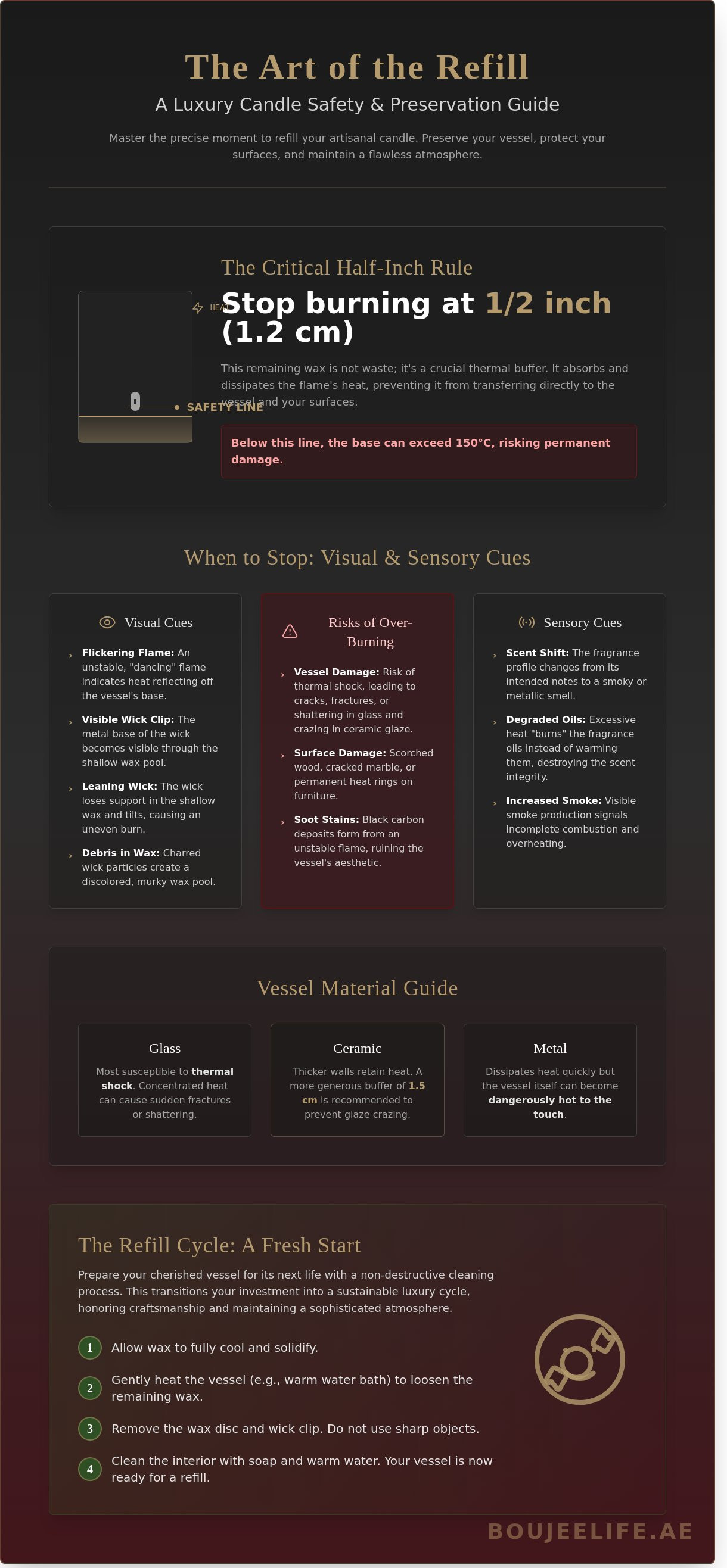
Every luxury candle has a definitive end point where the sensory experience must transition into maintenance. Professionals across the fragrance industry adhere to the half-inch rule, which equates to exactly 1.2 centimeters of residual wax. This isn't a suggestion; it's a safety requirement for high-end vessels. Understanding when to refill a candle starts with recognizing that wax serves as more than just a scent carrier. It acts as a thermal buffer. When the wax pool becomes too shallow, the flame's heat transfers directly to the base of the container rather than being absorbed and dissipated by the fuel source.
Operating a candle below this 1.2-centimeter threshold risks permanent damage to your interior surfaces. Heat can reach temperatures exceeding 150 degrees Celsius at the base of a dying wick. This intensity is enough to scorch polished wood, crack delicate marble, or leave permanent heat rings on lacquered sideboards. To measure this accurately without extinguishing the flame, slide a thin metal ruler or a marked wooden skewer into the wax away from the wick. If the depth reads less than 1.2 centimeters, it's time to stop the burn and prepare for a refill.
The Safety Threshold for Glass Vessels
Glass containers are particularly susceptible to thermal shock. As the flame nears the bottom, the concentrated heat causes the glass to expand unevenly. This internal tension can lead to sudden fractures or shattering. You'll often see the metal wick clip become visible through the liquid wax pool at this stage. Stop the burn immediately when this occurs. Continuing to light a candle at this level often results in unsightly soot marks. These black carbon deposits occur because the flame flickers more violently in the shallow oxygen pocket at the base, ruining the aesthetic of premium glass collections.
Container Variations: Ceramic vs. Metal
Different materials demand different levels of caution. Ceramic vessels, such as those found in the Zafran series, feature thicker walls that retain heat for longer durations. These artisanal pieces often require a slightly more generous wax cushion, closer to 1.5 centimeters, to ensure the glaze doesn't craze or crack under pressure. Metal containers dissipate heat quickly but can become dangerously hot to the touch within minutes. The diameter of your vessel also plays a role. A wide-wick candle creates a larger heat signature, meaning the final half-inch of wax will liquify much faster than it would in a narrow votive. For those ready to refresh their collection, you can explore professional-grade options at https://boujeelife.ae/collections/all to maintain the ambiance of your space.
Visual and Sensory Indicators: Signs Your Candle is Done
Recognizing the precise moment a candle reaches its limit is essential for maintaining the safety and aesthetic of your space. A flickering or dancing flame near the bottom of the vessel serves as a primary warning sign. This instability occurs because the heat reflects off the glass base, creating a localized pocket of high temperature that disrupts the air currents around the wick. If the flame begins to jump or produce visible smoke, the wax has likely reached a depth of 1.5 centimeters or less. This is a critical indicator of when to refill a candle to prevent the glass from overheating.
Wick behavior provides another clear signal. In the final stages, you might notice "mushrooming," which is a carbon buildup at the tip of the wick. While this can happen at any stage, it becomes more pronounced as the wick struggles to draw the remaining concentrated fragrance oils. A leaning wick is equally telling. As the wax pool becomes shallow and liquid, the wick loses its structural support and may tilt toward the side of the container. This uneven burn can lead to thermal shock in the glass, making it the perfect time to transition to a fresh refill.
The appearance of the wax pool undergoes a distinct transformation near the end. You might spot greyish discoloration or small flecks of debris settled at the bottom. These are typically charred wick particles that have migrated into the liquid wax. This change in clarity suggests the wax is no longer pure, affecting both the visual appeal and the quality of the burn.
Detecting the Olfactory Shift
The fragrance profile of a luxury candle is a delicate balance of top, middle, and base notes. As the candle nears the base, the scent often shifts from its intended floral or earthy character to something noticeably smoky or metallic. This olfactory change happens because the heat intensity increases as the wax volume decreases. Fragrance oils have specific flash points; when the heat exceeds these levels, the oils degrade rather than evaporate cleanly. Choosing to prioritize the integrity of your vessel over the final hour of scent ensures your collection remains pristine. You can easily browse new fragrance options once the original scent loses its clarity.
The Role of Climate and Humidity
Environmental conditions in the United Arab Emirates significantly influence how your candle behaves. High ambient temperatures can lower the softening point of luxury wax blends, which often sits around 48 degrees Celsius. In the humid coastal regions of Dubai and Abu Dhabi, candles may burn up to 12 percent faster than in arid environments. Moisture in the air interferes with the combustion process, sometimes causing the wick to crackle or the flame to burn larger than usual. Understanding these regional factors is vital for deciding when to refill a candle to ensure a consistent experience. To maintain your collection, learn more about candle care in humidity and how to protect your scents from the Gulf's unique climate.
The Risks of Over-Burning: Protecting Your Investment
Ignoring the signal to stop burning your favorite scent does more than just create a flickering flame. It places your entire aesthetic environment at risk. High-end candles are designed as holistic sensory experiences, where the vessel is as valuable as the fragrance itself. When the wax level drops too low, the flame's heat is no longer absorbed by the wax pool. Instead, that energy transfers directly to the base and walls of the container. Understanding exactly when to refill a candle is the difference between a seamless transition and a ruined centerpiece.
Structural Integrity and Thermal Stress
Artisanal glass and ceramic vessels, such as the Romanesque or Sahara collections, undergo significant thermal stress during use. Glass expands when heated and contracts as it cools. While premium vessels are engineered to withstand these shifts, they aren't invincible. When a wick burns directly against the bottom or sides of a jar, the temperature can spike rapidly. This localized heat causes uneven expansion, leading to micro-cracks that compromise the jar's strength.
If you push a candle past the safety limit, these invisible fractures can cause the vessel to shatter during a future burn. Preserving these pieces for long-term decor use requires discipline. You should stop the burn when approximately 1.25 centimeters of wax remains. This buffer acts as a heat shield, ensuring the structural integrity of your collection remains intact for its next life as a refillable treasure.
Protecting Your Interior Surfaces
The heat transfer from an over-burned candle doesn't stop at the glass. During the final stages of a burn, the base of a candle vessel can reach temperatures exceeding 70 degrees Celsius. In many Dubai residences, where bespoke marble consoles or polished wooden side tables are standard, this heat is a silent predator. Heat soak can cause marble to discolor or "bloom," creating cloudy patches that are incredibly difficult to remove. Professional marble restoration in the UAE can cost upwards of 500 د.إ per square meter, making an over-burned candle an expensive mistake.
- Luxury coasters and trays provide a necessary barrier but don't eliminate the risk of heat transfer.
- Wooden surfaces may experience "alligatoring," where the finish bubbles or cracks due to prolonged heat exposure.
- Maintaining your home fragrance zones means respecting the physical limits of the materials involved.
The aesthetic cost of over-burning extends to the refill process. When the wick tab burns directly against the bottom, it often leaves a permanent scorch mark or a stubborn soot residue. This makes the cleaning process significantly more labor-intensive. By learning when to refill a candle and acting before the wax is depleted, you ensure the vessel remains pristine. A clean jar allows for a seamless refill experience, letting you swap scents without the ghost of a scorched base ruining the visual appeal of your next selection.
Refill Preparation Checklist: Getting Your Vessel Ready
Restoring a luxury candle vessel is a ritual that demands precision. It's a bridge between the final flicker of one scent and the debut of the next. A pristine canvas ensures that the new fragrance remains untainted by charred remains or old wax. Preparing your vessel correctly preserves the aesthetic value of your collection while ensuring safety for the next burn.
The process begins once you've decided when to refill a candle. You'll need a few basic tools to achieve a professional result at home. Gather a wooden spatula or a dull butter knife, some paper towels, and mild dish soap. Avoid using sharp metal scrapers that can leave permanent gouges on the interior of your glass or ceramic containers.
Safe Wax Removal Techniques
Temperature control is your most effective tool. The freezer method is the safest way to remove leftover wax without risking heat damage to the vessel's finish. Place the container in the freezer for approximately three hours. Cold temperatures cause the wax to contract and pull away from the walls. Most wax discs will pop out in one piece with a gentle nudge from your spatula.
Once the bulk of the wax is removed, address the remaining film. Use warm water and a soft cloth to wipe the interior. High-quality soy wax blends typically melt at temperatures between 45 and 52 degrees Celsius, so standard tap water is sufficient. Stay away from abrasive chemicals or scouring pads. These can strip away gold leaf accents or delicate matte coatings common in high-end UAE decor.
- Freeze the vessel for 3 hours to shrink the wax.
- Use a non-abrasive tool to pop out the solid residue.
- Wipe with warm soap and water to dissolve fragrance oils.
- Dry thoroughly with a lint-free cloth.
Preparing for a Professional Refill
Before you commit to a new pour, perform a rigorous safety inspection. Hold the vessel up to a bright light and check for hairline fractures or chips. Even a small imperfection can expand under the heat of a new flame, leading to a potential break. If the vessel shows signs of structural fatigue, it's time to retire it from candle duty and perhaps repurpose it as a stylish stationery holder.
The wick clip at the bottom often requires extra attention. If the adhesive is stubborn, a drop of rubbing alcohol usually dissolves the bond. Ensure the base is completely oil-free. A clean, dry surface is mandatory for the new wick to adhere properly. If the wick drifts during the curing process, the candle won't burn evenly. If you're looking to add a new centerpiece to your space, explore our full collection of artisanal candles to find your next signature scent.
Understanding when to refill a candle allows you to maintain a continuous sensory experience in your home. It's about more than just utility. It's about respecting the craftsmanship of the vessel and the atmosphere it creates. A clean vessel is the only way to guarantee a pure, soot-free burn for your next selection.
Ready to elevate your home atmosphere with a new fragrance? Shop the Boujee Life collection today
Sustainable Luxury: The Art of the Refill Cycle
Luxury isn't about being disposable. It's about endurance and intentionality. When your Sultana or Noctis jar reaches its final burn, the narrative shouldn't stop. Refilling is the most sophisticated expression of conscious living. It preserves the hand-finished craftsmanship of your vessel while introducing a fresh olfactory chapter. You're not just buying a product; you're participating in a circular economy that respects the planet. This process ensures your home aesthetics remain uninterrupted. You keep the weight and beauty of the original glass. You eliminate the waste of unnecessary packaging. It's a seamless transition that honors the art of fine living. Your home stays curated, and your footprint stays light.
The Environmental Impact of Vessel Reuse
Manufacturing high-quality glass demands immense energy. Furnaces often reach 1,500 degrees Celsius to melt raw materials. By choosing to reuse your jars, you significantly cut down on this industrial demand. Studies show that reusing a glass container can lower its total carbon impact by nearly 50% compared to purchasing a new unit. Boujee Life prioritizes this sustainability through a dedicated replenishment service. This initiative keeps premium materials out of landfills and reduces the logistical footprint of shipping heavy glass across the UAE. It's a practical way to enjoy opulence while supporting a greener future. Understanding when to refill a candle is the first step in this rewarding cycle of reuse.
Selecting Your Next Fragrance Chapter
A refill is a blank canvas for your home's atmosphere. You can choose to remain devoted to a classic. The deep, resinous notes of Zafran provide a consistent sense of warmth and heritage. However, many residents choose to match their scents to the shifting Dubai seasons. When the summer heat intensifies, moving toward the crisp, botanical notes of Floria creates a cooling indoor retreat. Think about the function of your room. Use grounding woods for the living area and bright, energizing florals for the entryway. This isn't just a replacement; it's a sensory upgrade.
You have the freedom to experiment with new profiles without the cost of a new vessel. Each refill typically costs approximately 30% less than a full new unit, making it a smart choice for the frequent burner. Knowing when to refill a candle gives you the power to curate your environment with precision. Visit the Boujee Life collection to discover your next signature scent and begin the journey of renewal. A refill isn't just a replacement; it's a complete renewal of your home’s unique atmosphere.
Master Your Signature Scent Cycle
Preserving the integrity of your luxury vessels requires precise timing and careful observation. The half-inch rule remains the gold standard; once wax reaches this 1.27-centimeter threshold, the heat can stress the glass and diminish the fragrance quality. Understanding when to refill a candle prevents over-burning and maintains the safety of your home environment. Look for physical signs like a flickering flame or a fading scent profile to signal the end of a burn cycle. Preparing your vessel is a straightforward process of removing residue, ensuring it's ready for a fresh, artisanal pour.
Boujee Life provides sustainable refill options for all signature vessels, featuring premium ingredients that deliver a long-lasting fragrance throw. These artisanal UAE-crafted scents are specifically formulated to thrive in the regional climate, offering a sophisticated olfactory experience. Every refill reflects a commitment to quality and a passion for the Dubai lifestyle. It's a seamless way to keep your home filled with iconic aromas without losing the aesthetic of your favorite containers.
Sustain your fragrance experience with our professional candle refill service. Keep your atmosphere vibrant and your collection timeless.
Frequently Asked Questions
How many hours of burn time are usually left when a candle reaches the half-inch mark?
A standard 250g candle typically offers 2 to 4 hours of burn time once the wax reaches the half-inch mark. Stop burning the flame immediately at this point to prevent the glass from overheating. In the UAE climate, maintaining vessel integrity is vital for safety. This final stretch is the perfect moment to decide when to refill a candle to ensure your space remains fragranced without interruption.
Can I still burn my candle if the wick has shifted to the side near the bottom?
Don't continue burning a candle if the wick has migrated toward the glass wall. This creates uneven heat distribution that can cause the jar to crack or shatter. Extinguish the flame immediately. Use a wick dipper to center it while the wax is still liquid; otherwise, prepare the vessel for a fresh refill to maintain a seamless experience.
What happens if I accidentally burn my luxury candle all the way to the glass?
Burning a luxury candle to the very bottom risks shattering the glass due to intense, direct heat exposure. Most high-end vessels are designed for durability, but the concentrated heat at the base is dangerous. You might also scorch the surface beneath the jar. Safety standards suggest leaving 12 millimeters of wax to protect your prestigious investment and your home.
Is it safe to refill a candle jar that has a small chip in the rim?
Avoid refilling any glass jar that shows signs of structural damage like chips or hairline fractures. Even a minor chip weakens the entire vessel. When you pour hot wax into a compromised container, the thermal shock can cause it to burst. Invest in a new, pristine jar to maintain the iconic aesthetic and safety of your collection.
How do I remove the last bit of wax if I don’t want to use the freezer method?
Use the hot water method to lift remaining wax without using a freezer. Pour water heated to 70 degrees Celsius into the jar, leaving a small gap at the top. The wax will melt and float to the surface naturally. Once the water cools, the wax hardens into a disc that's easy to remove. This simple process keeps your vessel ready for its next life.
Can any candle jar be refilled, or only specific luxury brands?
Only use jars specifically manufactured for high heat, regardless of the brand name on the label. Luxury brands often use thicker, tempered glass designed for multiple uses and long-term durability. Jam jars or thin decorative glass might not survive the consistent heat of a candle flame. Ensure your chosen vessel is non-porous and sturdy before you decide when to refill a candle with a new scent.
How often should I trim the wick during the final stages of a candle’s life?
Trim your wick to 5 millimeters before every single light during the final stages of the candle. Check the wick every 2 hours of active burn time to ensure it hasn't mushroomed. A long wick creates a larger, hotter flame that consumes the remaining wax too quickly. Precise trimming ensures a clean, soot-free experience and preserves the clarity of your glass for a beautiful refill later.

